
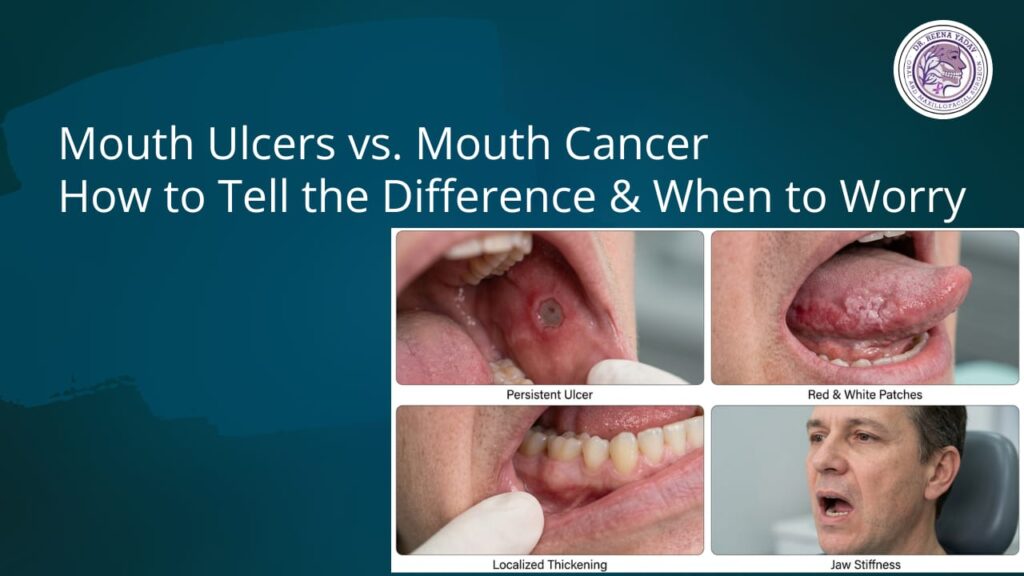
Mouth ulcers are common and usually harmless, but when a sore in the mouth does not heal, it can cause fear and confusion. Many people wonder whether a persistent ulcer could be a sign of mouth cancer. Understanding the difference between simple mouth ulcers and oral cancer is crucial for early diagnosis and timely treatment.
In India, oral cancer is among the most common cancers, largely due to tobacco use. Knowing when to worry can save lives.
What Are Mouth Ulcers?
Mouth ulcers are small, painful sores that appear on the inner cheeks, lips, tongue, gums, or floor of the mouth. They are usually temporary and heal on their own.
Common causes of mouth ulcers include:
- Stress and fatigue
- Vitamin B12, iron, or folic acid deficiency
- Accidental biting or sharp teeth
- Poor oral hygiene
- Spicy or acidic food
- Hormonal changes
- Viral infections
Typical features of mouth ulcers:
- Painful, round or oval sores
- White or yellow center with red border
- Heal within 7–14 days
- May recur occasionally
These ulcers are not cancerous and usually improve with medication and proper nutrition.
What Is Mouth Cancer?
Mouth cancer (oral cancer) develops when abnormal cells grow uncontrollably in the oral cavity. It may affect the tongue, gums, cheeks, lips, palate, or jaw.
Unlike common ulcers, cancerous ulcers do not heal and often worsen over time.
Major risk factors include:
- Tobacco smoking or chewing
- Gutkha, khaini, and pan masala use
- Excessive alcohol consumption
- Areca nut (supari)
- Poor oral hygiene
- HPV infection
Key Differences: Mouth Ulcer vs. Mouth Cancer
| Feature | Mouth Ulcer | Mouth Cancer |
| Pain | Painful initially | Often painless early |
| Healing time | Heals in 1–2 weeks | Persists beyond 2 weeks |
| Appearance | Round, soft edges | Hard, irregular margins |
| Bleeding | Rare | May bleed easily |
| Growth | Does not increase | Gradually enlarges |
| Associated lump | No | Neck lump may appear |
If an ulcer lasts more than two weeks, it should never be ignored.
Warning Signs That Need Immediate Medical Attention
You should consult a specialist if you notice:
- Mouth ulcer not healing after 14 days
- White or red patches inside the mouth
- Persistent mouth pain or burning sensation
- Difficulty chewing or swallowing
- Numbness in tongue or lips
- Unexplained bleeding from mouth
- Lump in the neck or jaw
- Change in speech or voice
Early-stage oral cancer often appears painless, which is why many cases are diagnosed late.
When Should You Worry?
You should be concerned if:
- You use tobacco or alcohol
- The ulcer is increasing in size
- Pain persists despite medication
- The lesion feels hard when touched
- You experience unexplained weight loss
Early evaluation by a head and neck cancer specialist can determine whether the lesion is benign or requires further testing.
Diagnosis and Screening
Diagnosis may include:
- Detailed oral examination
- Biopsy of suspicious lesion
- Imaging such as CT or MRI if required
Early detection allows simpler surgery and significantly better outcomes.
Conclusion
Most mouth ulcers are harmless and heal naturally. However, any ulcer lasting more than two weeks must be evaluated to rule out oral cancer. Awareness, early screening, and timely consultation are the keys to successful treatment.
Dr. Reena Yadav, an experienced Oral & Maxillofacial Surgeon and Head & Neck Cancer Specialist, provides comprehensive evaluation and advanced treatment for oral lesions and mouth cancer. At maxfaxdrreena.com, patients receive accurate diagnosis, personalized care, and modern surgical solutions focused on early detection and long-term recovery.
If you have a persistent mouth ulcer — don’t wait. Early consultation can save your life.