
Orofacial Pain &
Facial Pain
Persistent facial pain is not always a dental problem. Accurate diagnosis helps identify whether your pain is arising from the jaw joint, muscles, nerves, teeth or surrounding facial structures.
Facial pain can have many different causes.

What Is Orofacial Pain?
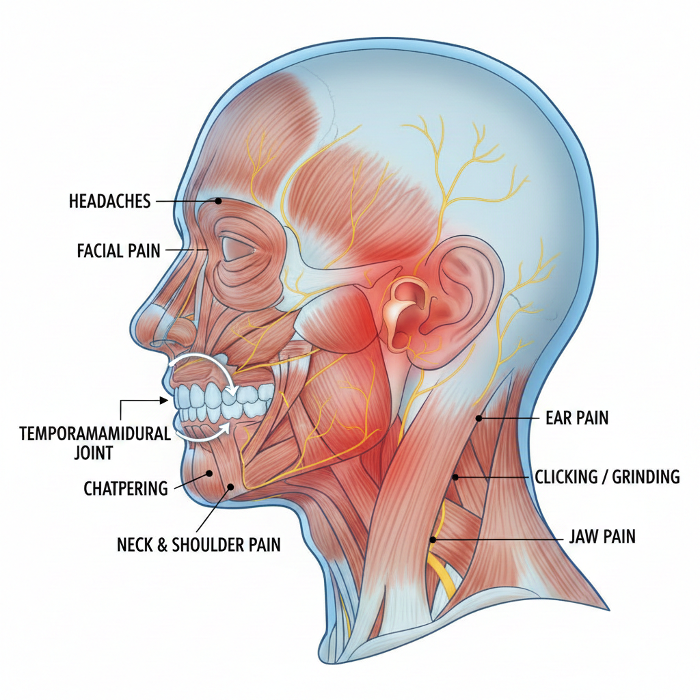
Orofacial pain is a broad term used for pain affecting the mouth, jaw, face, temples, ears and surrounding head and neck structures.
Because several nerves, muscles, joints, teeth and other facial structures are located close together, different conditions can produce very similar symptoms.
A toothache-like sensation, for example, may sometimes arise from the temporomandibular joint, facial muscles or a nerve rather than from the tooth itself.
What Can Cause Facial Pain?
Facial pain can arise from several different structures. Identifying the source is essential before deciding on treatment.
TMJ Disorders
Pain arising from the jaw joint may be accompanied by clicking, stiffness, locking, headaches or discomfort while chewing.
Trigeminal Neuralgia
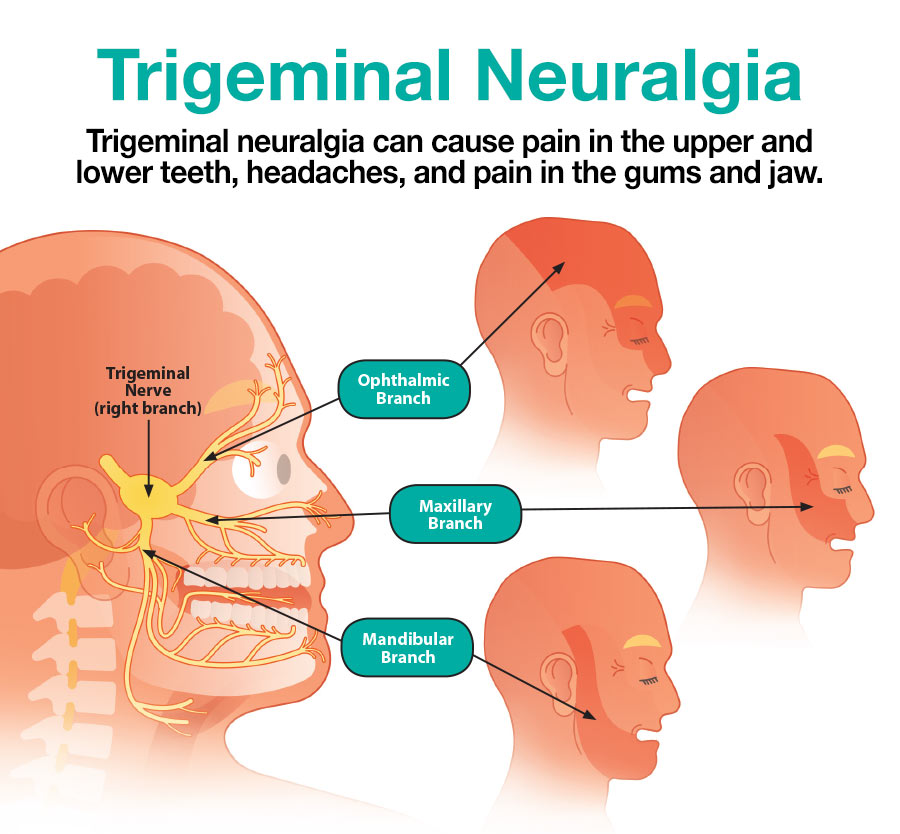
Sudden, severe, electric-shock-like facial pain that may be triggered by touching the face, brushing, eating, speaking or cold air.
Myofascial Pain
Tight or overworked facial and jaw muscles may produce aching pain, tenderness and discomfort extending into the temples or neck.
Dental & Referred Pain
Tooth, gum and jaw conditions can sometimes refer pain into nearby facial regions, making diagnosis difficult.
Post-Traumatic Pain
Facial injuries, fractures or previous procedures may occasionally result in persistent nerve or musculoskeletal pain.
Persistent Facial Pain
Some patients develop ongoing facial pain even when no obvious dental cause is visible, requiring a broader specialist assessment.
When Should You Seek an Evaluation?
A specialist evaluation may be useful when pain keeps returning, interferes with daily activities or does not improve after routine dental treatment.
Trigeminal Neuralgia Can Feel Like a Toothache
The trigeminal nerve provides sensation to much of the face, jaw, teeth and gums. When this nerve is affected, patients can experience extremely intense episodes of facial pain.
Because the pain may be felt in the teeth or jaw, some patients initially believe they have a dental problem.
Correctly distinguishing nerve pain from dental, muscular or TMJ-related pain can help avoid inappropriate treatment and guide further investigation.
Request a Facial Pain EvaluationFinding the Source of Your Pain
Orofacial pain diagnosis is often a process of carefully understanding the pattern, triggers and structures involved.
Detailed Pain History
Understanding where the pain starts, how it feels, how long it lasts and what triggers it.
Clinical Examination
Evaluation of facial structures, jaw movement, muscles, TMJ, teeth and sensory function.
Imaging When Required
X-rays, CBCT, MRI or other investigations may be advised depending on clinical findings.
Personalised Diagnosis
Treatment is planned according to the actual source of pain rather than symptoms alone.

Treatment Depends on the Cause
Orofacial pain is not one single disease. Management is personalised according to the diagnosis and severity of symptoms.
Conservative Management
Lifestyle modification, jaw rest, dietary advice, heat therapy and avoidance of pain-triggering habits may be recommended when appropriate.
Medication
Depending on the diagnosis, appropriate medication may be advised to control inflammation, muscular pain or nerve-related symptoms.
TMJ & Muscle Therapy
Splints, physiotherapy and specialised TMJ treatments may help selected patients with joint and muscle-related facial pain.
Advanced Intervention
Minimally invasive or surgical treatment may be considered only when clearly indicated by the underlying condition.
Dr. Reena Yadav
Dr. Reena Yadav provides specialist assessment and management for conditions affecting the face, jaws and temporomandibular joint, including complex facial and orofacial pain.
Her approach focuses on identifying the underlying cause of symptoms before planning treatment, helping patients avoid unnecessary procedures whenever possible.