Oral cancer is among the most prevalent cancers in India, accounting for a disproportionately high number of cases globally — largely due to tobacco and betel nut use. Yet it remains one of the most treatable cancers when caught early. This guide explains what oral cancer is, how it is diagnosed, and what modern surgical treatment involves.
Dr. Reena Yadav is one of Mumbai’s most experienced oral cancer surgeons, with over a decade of treating complex oral malignancies at both Jai Ambe Hospital and RMS Multi-Speciality Hospital on Mira Road East.
What Is Oral Cancer?
Oral cancer refers to cancer that develops in any part of the mouth — including the lips, tongue, inner cheeks, floor of the mouth, roof of the mouth (palate), and gums. It most commonly presents as squamous cell carcinoma (SCC), a type of cancer arising from the flat cells lining the mouth.
In India, oral cancer represents nearly 30% of all cancers — a statistic deeply linked to the widespread use of tobacco, gutka, pan masala, and alcohol. Human papillomavirus (HPV) is also an emerging cause, particularly in younger non-tobacco users.
Early Warning Signs of Oral Cancer
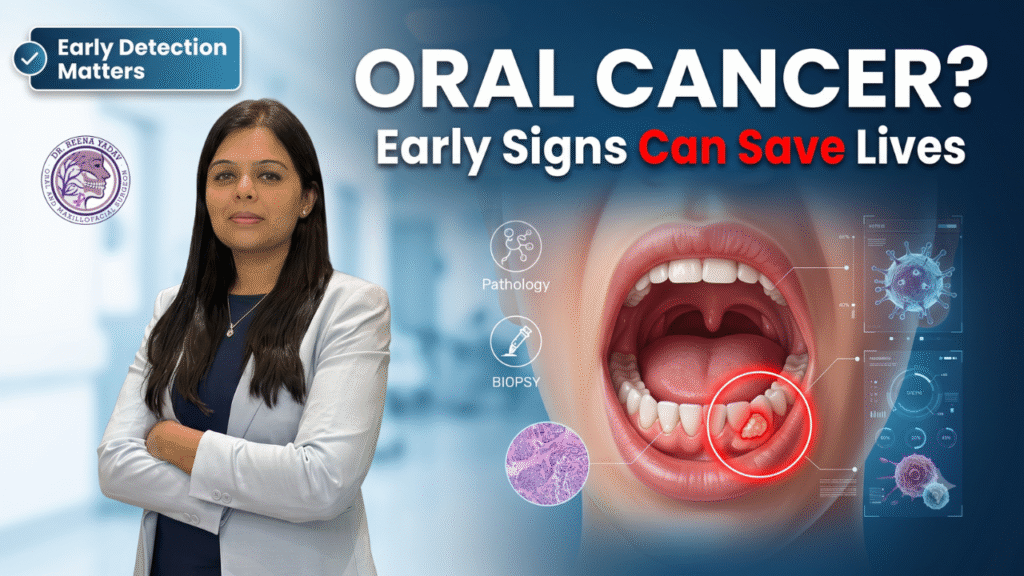
The danger of oral cancer lies in how easily it is dismissed as a common ulcer or toothache. Know when to be concerned:
- A mouth ulcer or sore that does not heal within 3 weeks
- White patches (leukoplakia) or red patches (erythroplakia) inside the mouth
- A lump, thickening, or rough area on the lips, gums, or inside the mouth
- Persistent difficulty chewing, swallowing, or speaking
- Unexplained numbness in the mouth, tongue, or face
- Swelling in the jaw that makes dentures or teeth fit differently
- A painless lump or mass in the neck (enlarged lymph node)
- Loosening of teeth without dental cause
Important: Not all mouth ulcers are cancerous. But any ulcer that persists beyond 3 weeks without healing must be evaluated by a specialist. Early-stage oral cancer is highly treatable — do not delay.
Risk Factors for Oral Cancer in India
- Tobacco use — smoking, chewing tobacco, betel nut, gutka, khaini
- Alcohol consumption, particularly when combined with tobacco
- HPV (Human Papillomavirus) infection—Types 16 and 18
- Poor oral hygiene and chronic dental irritation
- Nutritional deficiencies (iron, vitamins A and C)
- Submucous fibrosis — a pre-cancerous condition common in India
- Family history of oral or head-and-neck cancer
Oral submucous fibrosis (OSMF), caused by betel nut chewing, is a particular concern in India. It causes progressive stiffening of the mouth and is considered a pre-malignant condition. Early intervention can halt progression.
How Is Oral Cancer Diagnosed?
Step 1: Clinical Examination
Dr. Reena Yadav begins with a thorough examination of the entire oral cavity—tongue, floor of mouth, cheeks, gums, palate, and throat—as well as palpation of the neck for enlarged lymph nodes.
Step 2: Biopsy
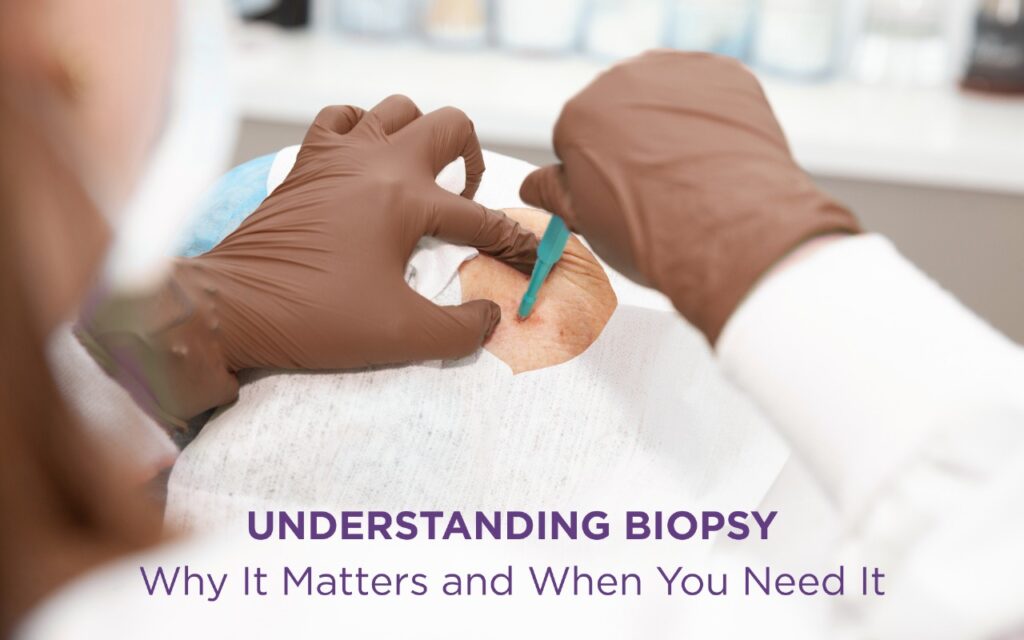
If a suspicious lesion is found, a small sample of tissue (biopsy) is taken and sent for histopathological analysis. This is the only definitive way to confirm or rule out cancer. The procedure is quick and performed under local anesthesia.
Step 3: Imaging
Depending on the biopsy results, advanced imaging is used to determine the extent of disease:
- OPG (dental X-ray) to assess jaw bone involvement
- Contrast CT scan of the face, neck, and chest
- MRI for soft tissue extent and nerve involvement
- PET-CT scan for distant metastasis detection
Step 4: Staging
Oral cancers are staged from Stage I (small, localized) to Stage IV (large, spread to neck or distant organs). Treatment plans depend heavily on staging.
Oral Cancer Surgery—What Does It Involve?
Surgery is typically the primary treatment for oral cancers, often combined with radiation therapy and/or chemotherapy. The extent of surgery depends on the size and location of the tumor.
Wide Local Excision
The tumor is removed along with a margin of healthy tissue around it (clear margins). This is performed for early-stage lesions of the tongue, floor of mouth, or cheeks. A reconstructive flap may be used to close the defect.
Neck Dissection
When cancer has spread — or is at risk of spreading — to the lymph nodes in the neck, neck dissection is performed. This involves removing the affected nodes while preserving key structures like the jugular vein and spinal accessory nerve when possible (selective/modified radical neck dissection).
Mandibulectomy & Maxillectomy
In cases where the tumor has invaded the jawbone, partial or complete removal of the lower jaw (mandibulectomy) or upper jaw (maxillectomy) may be necessary. Reconstruction using bone grafts or titanium implants follows to restore function and appearance.
Reconstruction & Rehabilitation
Oral cancer surgery is not just about removing cancer — it is equally about restoring the patient’s ability to eat, speak, and live normally. Dr. Reena Yadav has extensive experience in:
- Pedicled and free flap reconstruction
- Jaw reconstruction using fibula free flaps and titanium plates
- Dental implant placement after jaw reconstruction
- Obturator prosthetics for palate defects
- Speech and swallowing rehabilitation coordination
‘A scar does not matter; life matters.’ — Dr. Reena Yadav. Our goal is not just to cure cancer but to restore your quality of life.
What Is the Survival Rate for Oral Cancer?
Survival rates depend significantly on the stage at which cancer is detected:
- Stage I/II: 5-year survival rate of 70–90%
- Stage III: approximately 50–60%
- Stage IV: drops significantly, highlighting the importance of early detection
This is why we cannot overstate the importance of regular oral screenings — especially for tobacco users and those with pre-cancerous conditions like OSMF or leukoplakia.
After Surgery: Recovery & Follow-Up
Recovery from oral cancer surgery depends on the procedure performed. For minor excisions, patients recover within 1–2 weeks. Major reconstructive surgeries require a hospital stay of 7–10 days, followed by 6–8 weeks of home recovery.
The follow-up protocol includes the following:
- Monthly check-ups for the first year
- Three-monthly check-ups in years 2 and 3
- Annual check-ups from year 4 onwards
- Nutritional support and dietary counselling
- Oncology co-management with radiation/medical oncology teams
Why Choose Dr. Reena Yadav for Oral Cancer Treatment in Mumbai?
- Subspecialty training and 11+ years of experience in oral oncology
- Advanced surgical techniques including neck dissection and free flap reconstruction
- Patient-centered approach—every patient’s dignity and quality of life come first
- Collaborative care with oncologists, radiologists, and rehabilitation specialists
- Located at Mira Road East — accessible from across Mumbai
Book Your Oral Cancer Screening Today
If you or a family member has a persistent mouth sore, white patch, or unexplained jaw swelling, please do not wait. Early detection saves lives.
Call: +91 77388 06741